What Do the Colours and Ashoka Chakra in the Indian Flag Represent?
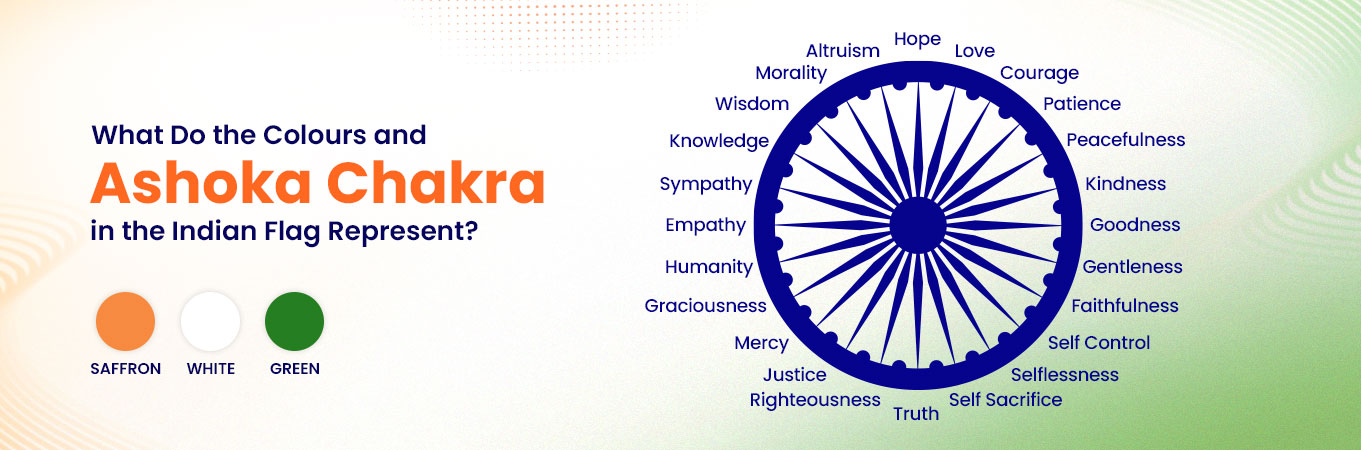
At the very first glance, the Indian flag seems like a simple work of artistic expression. It has three differently coloured horizontal stripes with a blue wheel in the middle. But once you take a closer look at the Indian flag's colours, you decipher a deeper meaning. These are not mere colours, but values and thoughts which have shaped the country since its independence. The flag colours and the Ashoka Chakra in the middle create a story of unity, balance, bravery, and continuous growth. Every Indian should know the meaning behind all the elements of the Tiranga and feel inspired by them.
Indian Flag Colours: Understanding the Meaning Behind Each Colour
The Indian flag colours are set in a particular order, each one representing an iconic and a different idea. Together, the three colours strike a balance that mirrors the set of values of the country. The colours and design of the Tiranga have been selected after an extensive thought to express the values that make India the unified nation it is.
Saffron: Strength and Courage
The topmost horizontal stripe of the Indian flag colours is saffron, which represents strength and courage of the country. This colour also stands for renunciation and disinterestedness– a call for leaders and citizens alike to rise above material desires. Saffron is representative of sacrifice, a value that is rooted in Indian traditions. In the Indian Tiranga, this colour placement at the top is a reminder that progress only comes from effort. It also reminds people that the price of growth can sometimes be sacrificing personal comfort for a larger purpose. The saffron colour sets the tone, asking people to move with and towards a higher purpose.
White: Truth and Peace
The middle stripe of the Indian flag colours is white, which symbolically represents truth and peace: the values which every Indian is expected to observe and imbibe. In the national flag colours, white stands for honesty in public as well as in the personal life of an individual, it is the path of truth to guide our conduct. This colour instils the idea that progress should be accompanied by clear thinking and fairness. White colour is a symbol of strength and growth achieved in the right way.
Green: Fertility, Growth, and Auspiciousness of the Land
The bottom stripe in the Indian flag colours is green, connecting the flag to the land and to the lives of the people. It reminds us that the future depends on the responsibility with which the present is handled. The green colour in the Indian national flag symbolises faith and chivalry, fertility, growth, and auspiciousness of the land. Being the bottom band, it highlights India's deep connection to agriculture, the soil, and a thriving, sustainable nation.
The Ashoka Chakra: The Wheel of Dharma
In the centre of the Indian flag colours is the Ashoka Chakra. This Dharma Chakra depicted the "wheel of the law" in the Sarnath Lion Capital made by the 3rd-century BC Mauryan Emperor Ashoka. The chakra intends to show that there is life in movement and death in stagnation. This is a navy blue wheel with 24 spokes, which are seen as a reminder that time moves without stopping, as should the nation. It suggests that a country cannot remain still and that progress needs ongoing effort, learning, and flexibility. The wheel shows that freedom can only exist when there is a methodical legal framework to protect it.
How the Indian Flag Colours Work Together
Viewing each of the colours of the flag separately gives each of them their respective meaning. But the real significance is shown in the way the Indian flag colours come together. The saffron colour brings strength. White brings direction. The colour green brings growth. The Ashoka Chakra makes sure that all of these are in motion. The Indflag ia Tiranga is a balanced system of ideas and values, each of which supports the other, developing a complete picture of what the country aims to be.
Why Understanding National Flag Colours Still Matters
The colours of the national flag are known by many, but their meaning is completely understood only by a few. These colours are prominently visible at national events, in schools, or on important days, quietly carrying the meaning that we fail to notice at times. Taking time to understand the Indian flag colours changes how we perceive our Tiranga.
These colors carry meaningful symbolism, and maintaining that significance is a key goal. The Flag Foundation of India, established by Naveen Jindal, dedicates itself to ensuring that the Tricolour is visible, respected, and emotionally connected to by every Indian. Their effort to produce the world's largest digital Tiranga exemplifies this commitment, creating a flag composed of people who give life to the values stitched with each thread of its colors.
The Indian flag colours and the Ashoka Chakra together form more than just a national symbol. They represent a way of thinking that balances strength, truth, and growth with continuous progress. The Indian Tiranga is designed to remind citizens of these values, not just during celebrations, but in everyday life. By understanding its meaning, the flag develops a deeper meaning, more than something we see on the surface. It becomes something we relate to and take immense pride in!
Comments
0 CommentsNo comments yet. Be the first to share your thoughts.
Leave a comment